By Moses Kaketo
Sun King‘s success & bankability is a proof low-end & unbanked are an investable asset class.
Just recently SunKing secured $40m Equity Round from Lightrock .
The investment will support the provider of off-grid solar energy products, to fuel expansion of decentralised solar energy systems across Africa & Asia.
it currently operates in 11 African countries & intends to deepen its presence in these markets, while entering new geographies where energy-access needs remain acute. Across Africa, over 600m people still have no access to electricity.
Sun King CEO T. Patrick Walsh says the company, which currently installs 330,000 solar kits a month, up from 10,000 in 2017), is targeting a run rate of one million installations monthly.
The company’s ambition is to serve 200m people globally by 2030. The company has delivered 29m solar products globally since 2007, catering to the needs of the underserved; 67% of customers previously had no access to electricity.
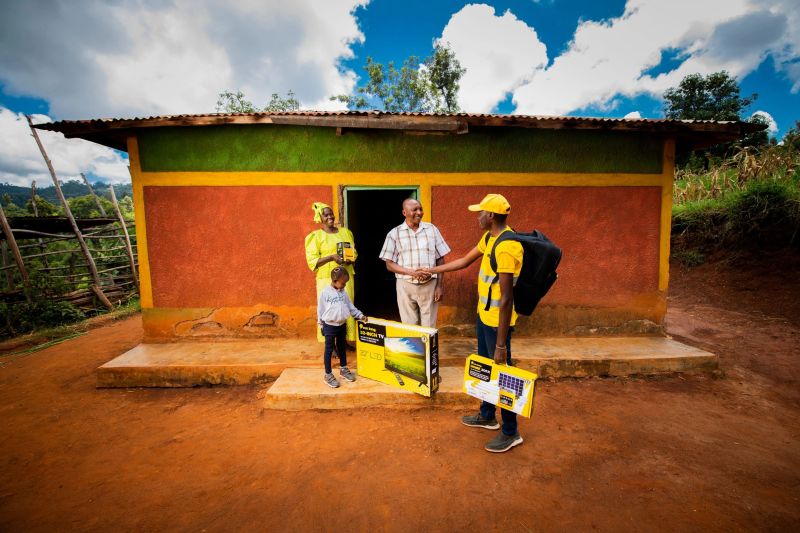
The company makes these products affordable through PayAsYouGo financing and supports them through a service network of more than 470 shops & 35,000 field agents.
SunKing’s pay-as-you-go model enables customers to buy solar systems with 12–24 months of purchase financing. This makes solar accessible for as little as $0.15-$0.20 per day, lowering the upfront cost that keeps low-income households and businesses locked out of reliable electricity.
To date, the company has provided $1.4 billion in customer financing across Africa, replacing demand for polluting & health-damaging fossil fuels, including kerosene and diesel fuel.
In July, the company closed a $156m securitisation deal in Kenya — the largest of its kind in sub-Saharan Africa outside of South Africa.
Sun King leverages its scale to secure lower costs of capital — evidenced by the involvement of blue-chip banks — smaller competitors are finding funding significantly harder to come by.
The success & bankability Sun King’s proves that low-income, unbanked customers are a investable asset class — if you have enough of them.
Over the years, the company, has transitioned from a hardware distributor to a utility-scale provider for off-grid populations.
Between 2025 & 2030, Sun King plans to grow its network of shops from 470 today to approximately 1,650 &; increase its agent workforce from 45,000 at present to, approximately, 90,000 across the African continent, forming one of Africa’s largest clean-energy distribution and service networks.
For the rest of the market, the window to compete with giants like Sun King is closing fast.
The market is currently undergoing a period of consolidation. Smaller pay-as-you-go solar operators are struggling with the “triple threat” of high operational costs , (managing rural agent networks, default risks from low-income customers) & a lack of access to cheap capital.