By Moses Kaketo
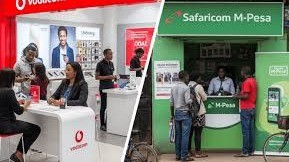
Vodacom Group has taken a decisive step to strengthen its position in East Africa with a multibillion‑rand agreement that would increase its ownership of Safaricom from 35 percent to 55 percent, pending regulatory approval. The deal, valued at $2.1 billion.
A powerful Kenyan family: some Kenyan Central Bank, officials had reportedly put strong barricades blocking the way for what would later be the engine and way of life for Kenyans – Safaricom’s M-PESA launch.
M-PESA also faced significant pressure against it from traditional banks. It was clear the M-PESAPESA launch had became a challenge..
There are unconfirmed reports that a powerful politician (back then),, using his powers, ordered the Central Bank to allow Safaricom to launch M-PESA. In return, it is said, the politician (or, his family) was awarded shares in the company.
Well, soon after the Vodacom deal, Safaricom shares jumped more than 4% to 29.25 shillings per share. Safaricom will also pay 34 shillings per share – a 23.6% premium on the past six months’ weighted average price.
You guessed right; the powerful Kenyan family, alongside investors including HSBC, Norges Bank, and Mobius, are all smiling into the bank after the Vodacom transaction.
South African brands on path to dominate African market
The Vodacom deal is also testimony to how South African brands, particularly those in telecommunications (Vodacom, MTN), banking (Standard Bank, Absa), insurance (Sanlam, Old Mutual) and retail (Shoprite, Woolworth), continue to dominate and expand in the African market.
Standard Bank Group, Africa’s biggest lender by assets, last month opened a presence in Egypt. The Johannesburg-based group now operates in 21 (high-growth) African markets. It also boasts global hubs in London, New York, Beijing and Dubai.
Absa is also present in 15 African (including high-growth) countries.
Meanwhile, South African insurance companies continue to expand and dominate African markets. Sanlam Group, Africa’s largest non-banking financial services group, operates in 30 African countries.
Its strategic alliance with Germany’s Allianz in 2023 further expanded its reach into West, East and North Africa.
Old Mutual, the pan-African insurance company, operates in more than 13 African countries. Founded in 1845, Old Mutual has reinvented itself as an African leader in insurance, asset management and banking.
Nairobi Stock Exchange
According to analysts, the US $2.1bn deal is a strong vote of confidence in the Nairobi Stock Exchange (NSE) and the Kenyan economy as an investment destination. Safaricom is Kenya’s biggest company by market capitalization, accounting for a lion’s share of the daily trading volumes on the NSE. The deal is expected to attract more offshore funds and investors beyond the bigcapitalisation, boys: HSBC, Norges Bank and Mobius.
Some observers think the government of Kenya’s stake reduction from 35% to 20% , reduces regulatory overhang which can influence investor perception and positioning. “Markets generally reward clearer governance pathways and reduced policy risk.”
“The consolidation enhances transparency and strengthens capital allocation; improved strategic cohesion redresses papacy noise – attributes public markets tend to favour.” Delick Manishumwe
Kenya gains a partner with deep pockets, commitment, reach and proven execution capacity.
MTN
There is an unwritten agreement between the two ‘brothers’ – Vodacom and MTN Group (both headquartered in South Africa) – never to compete against each other or operate in the country. You can do your research.
Vodacom is in Tanzania, Kenya, Mozambique and 08 other African countries. While MTN operates in several African countries, including DRC, Rwanda, Ghana, Nigeria, etc. Never have the two brothers operated in the same countries.
It’s not by mistake, but by design.
With Vodacom having a controlling stake in Safaricom, MTN feels safe when the brother is in charge of the region and the continent at large.
Kenya – an investment destination
Vodacom Group paid 68.1 bn shillings to consolidate full ownership of Vodafone Kenya, demonstrating serious capital to the Kenyan economy.
The transaction is good news for President Ruto’s debt-strained government. Faced with high and rising public debt, limited room to raise taxes and annual debt repayments that reportedly absorb 40% of government revenues, the Vodacom deal worth US$1.6 billion was like a godsend deal, at least for now.
According to Finance Minister John Mbadi, the funds from the transaction will be seed capital for the national infrastructure fund and the sovereign wealth fund. The government is creating two funds to invest in roads, irrigation projects, energy generation plants and the country’s main airport, without increasing the debt.
Enter Vodacom.
Vodacom did not acquire Safaricom shares at a discount. It paid significantly above market value. A clear signal of Safaricom’s intrinsic worth and future potential
The deal is a “key milestone in Vodacom’s Vision2030 strategy, which includes deepening its leadership in Africa’s high-growth areas and deepening its impact across Africa.”
Today Vodacom operates in 12 African countries.
Airtel
It’s bad news for Airtel Africa. In Kenya, Safaricom had given Airtel a run for their money.
Vodacom’s experience managing Safaricom’s 40% stake since 2008 has been marked by consistent profitability and market leadership.
M-PESA Africa holds 90% market share in mobile money.
Airtel failed to get a reasonable market share. They were just followers with about 34% market share. Safaricom leads with 64% market share.
Now that Vodacom is fully in charge. Airtel Kenya should expect more fire and energy.
With the entry of an aggressive, strategically focused Vodacom, it is going to be even tougher for Airtel Kenya. It should be noted that South Africans understand the African market better than their counterparts- the African counterparts –the Indians who own Airtel Africa.
Airtel may have to focus their energy and money in countries where they are market leaders in Zambia or DRC counterparts –, like Zambia, or in Uganda , like Zambia, or in Uganda, where they are number two.
However, some analysts say the Vodacom deal could be an opportunity for Airtel-Kenya to shine.
“Safaricom will now have to compete purely on the strength of its network, service quality and pricing…. And for the next generation of Kenyan subscribers who may grow up without a h history of Safaricom/M-PESA, their loyalty to Safaricom will be earned and not inherited ,”Safaricom will urges Oluwole Abegunfe.
Kenya Govt lost valuable asset
Is Kenya’s digital sovereignty at risk?
Safaricom is much more than a telecom. It is also an intelligence (economic and Political) gathering tool, especially in Africa. Telecoms gather a lot of information that they sell to third parties.
For example, telecoms using their ecosystem are able to collect and analyze data that they sell to companies, more so those entering market for the market the first. This information, for, helps entrants to know concentration of economic activities. This intelligence data is not cheap.
The data running through this system is the strongest credit scoring, risk sensing and scoring, government of Kenya could have ever heard.
By surrendering Safaricom’s controlling stake, GOK gave away a valuable asset. Did the Kenyan government sell their future?