
By Ian Ortega
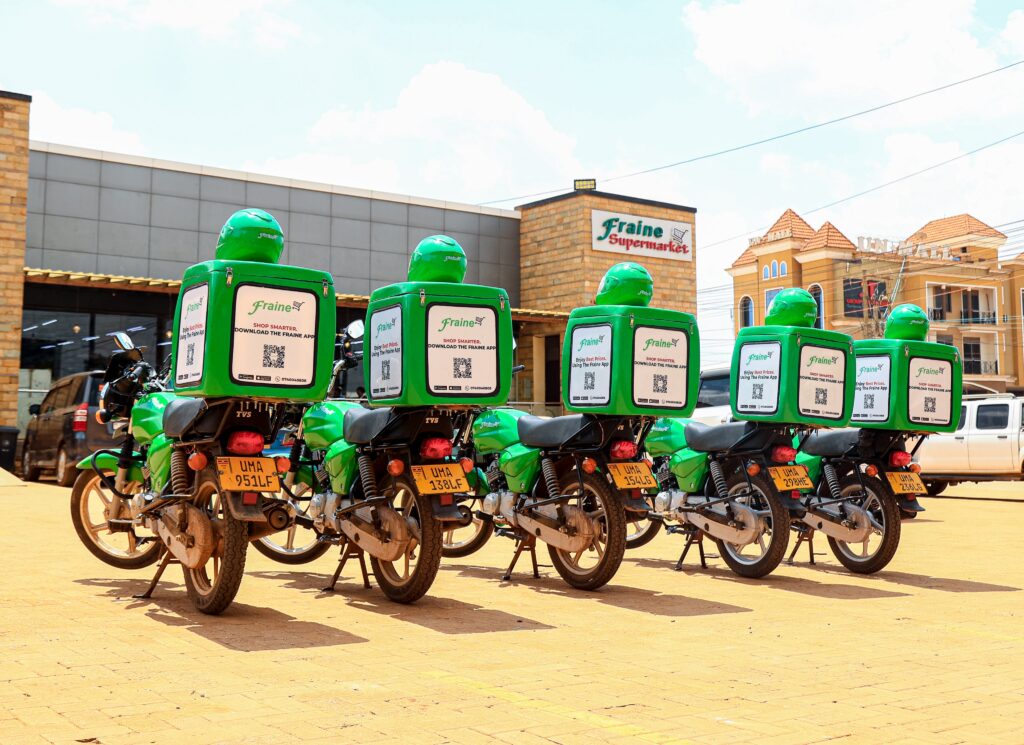
On 12th August 2026, the Ugandan netizens woke up to the news of Fraine Supermarket’s foray into the E-Commerce market. “We Deliver in Under 30 minutes” is the promise they’ve made to all those who will order through their App.
As a practitioner of strategy, I was excited, but also with reservations. It’s another of those moments, only comparable to when CJs aka Café Javas launched its Food Delivery service in January 2020. That time it was a restaurant choosing to venture out with scale.
Six years later, and Fraine Supermarket has asked, “why not?” They already have the physical infrastructure and have now chosen to build the logistical infrastructure over it. They’re also advantaged by their location in the suburbs. And thus, feel better positioned to tacked the last mile delivery problem.
Will they succeed? For those who’ve watched Odyssey, I say, the last mile in Uganda is comparable to the Island of Cyclopes. It can become a new business by itself (as is the case with CJs delivery), or it can be an expensive experiment.
I work on the assumption that Fraine assessed all these risks. Supermarkets in Uganda had achieved a strategic sameness – they offer the same products, same conveniences, with many running bakeries and food courts as an addition. That’s the stage where all major supermarkets had converged to in Uganda. Some have even gone ahead to do a backward integration, for example Quality Supermarket makes its own yoghurt.
The next stage of competition is in the Last Mile. I do suspect that Fraine’s entry into the e-commerce segment is going to cause a ripple effect, and generate a response from other supermarkets. They will want to make an entry into this market before Fraine captures all of it.
The other response is going to be from the e-commerce apps such as Glovo, as Fraine has started the journey of swallowing them.
For now, it seems the commitment is on speed of delivery. Fraine is selling that they will deliver in under 30 minutes. Is this a validated number? Will it set off a new set of consumer expectations? I am yet to use the app, so it could be possible, they may also promise lower delivery charges. If that’s the case, then it will be a bloody fight, with all the benefits going to the consumers. As I said, the strategists at Glovo are not sleeping, neither are those of the other major supermarkets. Quality? Capital Shoppers?
In my predictions, I also envisage that these Supermarket Delivery Apps may want to add a wallet component, thus will end up pivoting into mini-financial providers. Again, all apps converge into doing the same thing. The advantage here is that Fraine Supermarket has the infrastructure of the physical buildings and the goods. But so do the other supermarkets.
Being the first entrant doesn’t guarantee that you will own the share of the market. Sometimes the advantages could proceed to the second entrant. What will happen when Quality Supermarket enters this segment? Or Carrefour? Because they’re not going to sit aside and watch.
But is there enough market to sustain this e-commerce segment? Could it be a fancy investment, that looks promising but with a narrow total addressable market? How often do Ugandans purchase from the supermarket? What is the value? Speed? Is speed the real bottleneck stopping Ugandans from using the e-commerce platforms?
CJs understood early enough and chose to stick to quality as the selling proposition for its online delivery. They do not promise to get there faster, but to get their on-time with a guaranteed perfect order. All these complexities only become evident once one has their boots on the ground. If there’s the fog of war, this is the fog of business.
That’s why I am excited to watch how all this will play out. I am watching for the reactions from the competition, from existing players in the e-commerce industry.
It could also be evidence that the human traffic in supermarkets has peaked. It’s also possible that Fraine Supermarket has been watching the percentage of their sales that’s been coming from Glovo Sales. It’s data they must have collected and have decided – “why not go take this market for ourselves?” Go grab the whole market. Why continue to go through Glovo to access this market? Because what’s Glovo doing differently?
It is also poking holes in Glovo’s strategy, a lack of clear differentiation. The only advantage Glovo has is that it can absorb pain for long. Will Fraine sustain this if it turns out that doing the last mile by themselves is not bringing in superior returns? Or is it that they entered delivery because there was no other way to grow their market base other than going for the generation that now lives and conducts everything online?
I work off the basis that they have more nuanced market intelligence that informed this decision. They must have seen the future and are proofing themselves, getting there early before they are too late.
As I have said, we have crossed a rubicon, and let’s watch closely the next months.
For now, I will proceed to download the App, and continue this live case study.
Post-Script:
1. This is not their first time to try out deliveries to the door-steps. Exception here is that they’ve now put an App and Bike infrastructure behind it.
2. I have always imagined a possibility of doing last mile deliveries using ‘Foot Soldiers’ utilizing the walkers.
3. Challenges of last mile delivery in Uganda are compounded by a narrow and unstable middle class, poor road infrastructure, limited home mapping, lack of economies of scale, and thin-margins (among the others).
4. The advantage CJs had when it did its app is that it has a unique brand, selling a unique product. Fraine in this case is not selling unique products. What will guarantee the repeat orders? Is it the promise? Under 30 minutes?