
By Ian Ortega
Uganda’s struggle to stabilize power distribution may feel acute, even alarming, but it is not unique within the East African region. When viewed comparatively, Uganda’s experience fits a broader regional pattern where generation has raced ahead of distribution, and where last mile constraints have become the defining weakness of power systems.
Across East Africa, governments have invested heavily in power generation over the last two decades. Hydropower dams, geothermal plants, thermal stations, and cross border interconnectors dominate national energy narratives. Distribution, however, has remained the quiet, underfunded cousin. It is politically less visible, technically messy, and financially unrewarding in the short term. Yet it is precisely where most systems break down.
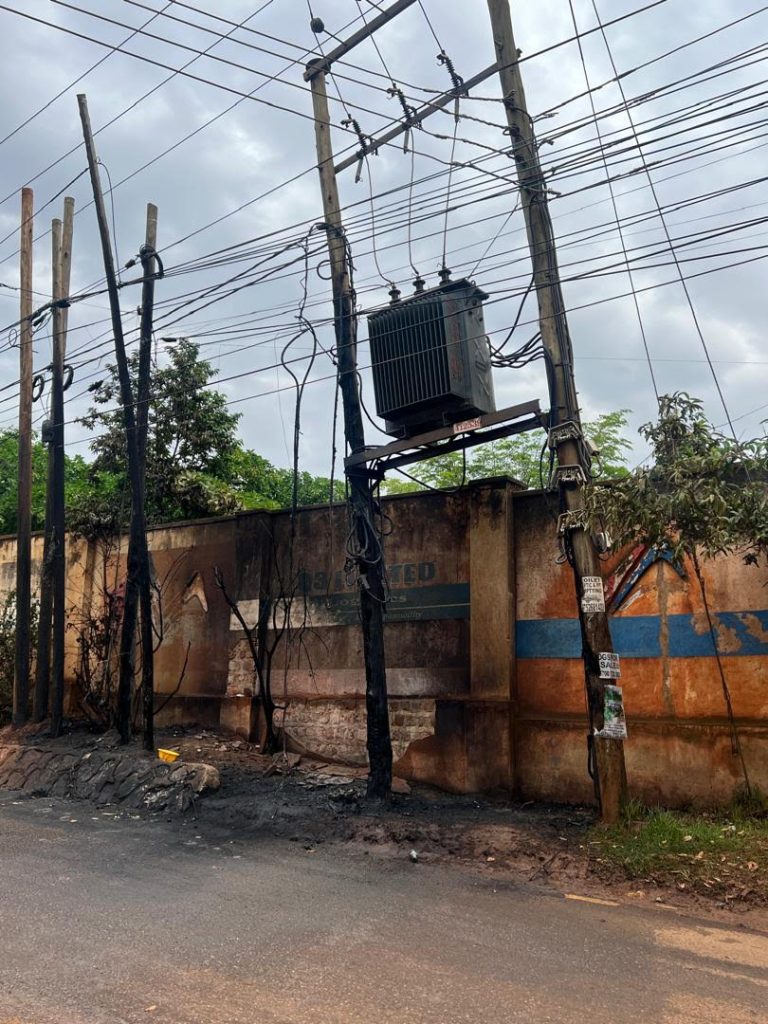
Kenya offers the most instructive comparison. Kenya Power and Lighting Company has long faced criticism for outages, voltage instability, and high losses, despite Kenya having one of the most diversified generation mixes in the region. The underlying problem has consistently been distribution. Overloaded transformers, aging conductors, and congested urban substations in Nairobi, Kiambu, and Mombasa mirror the challenges now visible in Kampala.
Kenya’s peak demand patterns are also similar to Uganda’s. Consumption spikes sharply in morning and evening shoulder hours, driven by residential and commercial use. Although Kenya generates more power per capita than Uganda, its distribution losses have hovered in the mid to high teens for years. The lesson is clear, increased generation does not automatically translate into reliable supply at the socket.
Tanzania’s experience follows a slightly different path, but leads to the same destination. TANESCO’s major challenge has been financial and operational instability, which has limited sustained investment in distribution. While Tanzania has made significant progress in expanding access, particularly in rural areas, the quality of supply remains uneven. Urban centers like Dar es Salaam experience frequent outages linked to transformer overloads and delayed maintenance.
What Tanzania illustrates well is the cost of deferred distribution investment. Emergency repairs, reactive maintenance, and politically driven connections gradually erode system resilience. Over time, distribution becomes the bottleneck that constrains both reliability and revenue collection.
Rwanda, often cited as a regional success story, provides a contrasting but still instructive case. The Rwanda Energy Group pursued aggressive access expansion while simultaneously investing in distribution infrastructure, especially in urban areas. Loss reduction, network automation, and strict performance management were treated as core objectives rather than secondary concerns.
Even so, Rwanda’s relatively strong performance is partly a function of scale. Its compact geography, lower absolute demand, and centralized planning reduce the complexity of the last mile. The challenge Rwanda faces today is similar to where Uganda is headed, sustaining quality of supply as demand grows and consumption patterns become more urban and peak heavy.
Ethiopia presents a different constraint profile. Generation capacity has expanded rapidly, anchored by large hydropower projects. Distribution, however, remains the weakest link. High technical and commercial losses, combined with limited transformer availability, have slowed the translation of megawatts into usable electricity for consumers.
Ethiopia’s case reinforces a critical point. Distribution systems do not scale linearly with generation. They require continuous, granular investment and operational discipline. Without this, even abundant generation capacity fails to deliver economic impact.
Across all these countries, one pattern stands out. Transformers are the regional choke point. Lead times are long, global demand is rising, and utilities compete for the same manufacturing slots. No East African utility has been able to fully escape this constraint. Those that perform better have not eliminated it, they have simply planned around it more realistically.
Another shared feature is the political economy of distribution. Urban elites, industrial zones, and government districts receive implicit priority everywhere in the region. This is not unique to Uganda. What differs is how transparently and strategically this prioritization is managed. Utilities that acknowledge this reality and use it to stabilize cash flows tend to perform better in the short term, even if it raises equity concerns.
From a theory of constraints perspective, East African power systems are stuck at the same stage. Distribution is the bottleneck, transformers are the sub bottleneck, and peak hour demand concentration amplifies stress across the network. Attempts to fix everything at once usually fail. Systems improve only when constraints are sequenced and addressed deliberately.
This regional comparison also sheds light on Uganda’s three year stabilization horizon. It is not pessimistic. If anything, it is realistic. Kenya’s distribution challenges have taken over a decade to manage without being fully resolved. Tanzania’s remain ongoing. Rwanda’s relative success was built over years of focused, disciplined investment. Ethiopia is still early in its distribution reform cycle.
Uganda’s transition from UMEME to UEDCL did not create a crisis. It removed a layer of shock absorption that had been masking structural weaknesses. In that sense, Uganda is now experiencing what much of the region has already endured, just more visibly and more suddenly.
The real question is not whether Uganda can stabilize its distribution system within three years. It is whether UEDCL can resist the regional trap of treating distribution as a secondary concern once political pressure eases. East Africa’s experience shows that when attention shifts back to generation headlines and megawatt announcements, the last mile quietly deteriorates again.
If Uganda can internalize this regional lesson, prioritize distribution as a permanent strategic function, and manage its constraints honestly, it may not only stabilize faster than its peers, but also avoid repeating their mistakes.
Photo Credit: Marrion Apio