By Moses Kaketo
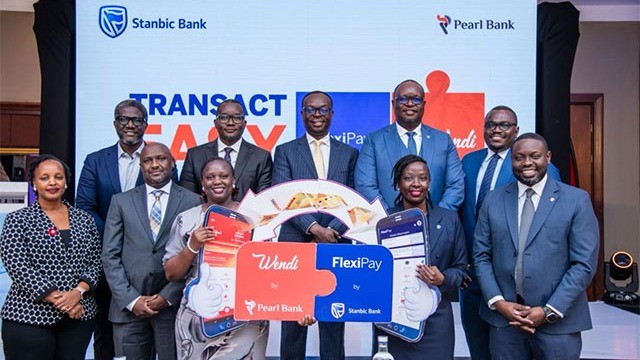
In 2022, Stanbic Bank, Uganda’s largest commercial bank by assets, held 24 percent of the sector’s assets. It launched a platform called FlexiPay that was meant to counter mobile money.
FlexiPay was meant to take on the fast-growing mobile money (MTN MOMO & Airtel Money) that was becoming a serious threat to the bank and banking sector in Uganda.
On paper, FlexiPay appeared capable of addressing the threat. Stanbic Bank bosses were wrong.
According to industry analysts, many things were not done properly at planning and execution. Therefore, FlexiPay was bound to struggle. It was bound to fail.
Five years later, FlexiPay has failed to deliver on the promise. Today, Mobile Money views FlexiPay as any other player, with a very minimal threat.
As of late last year, Stanbic Bank claimed to have 17,800 FlexiPay agents across the country. However, on the ground, finding an active FlexiPay agent is as difficult as finding water in the desert.
Many of the points with “FlexiPay services available here” are just points of advertising. The shop and kiosk owners with these posters are not aware of the product.
Stanbic Bank also claims to have 1.5 million customers on the platform. Never mind, a good number of the said 1.5 million customers have either never transacted on the app since they signed in. While others no longer use the app. They were frustrated. Some customers claim FlexiPay is more expensive compared to mobile money.
Dead horse theory – A practical example
As FlexiPay continues to struggle in the market, mobile money, on the other hand, continues to grow day and night. As of late last year, MTN MoMo active users grew to reach 14.9 million, up from 10.9 million customers in 2022. MOMo also has over 241,000 active agents and 114,800 active merchants. Airtel Money Uganda has registered similar milestones.
Over the years, Stanbic Bank Uganda launched several promotions to boost the product, including “Kikole for Less” and “FlexiPay Cashback Explosion“. Among others. These initiatives have had very minimal impact.
The bank also added some new features on the platform through partnerships, including Wendi and Upesi. Unfortunately, all these have not yielded much.
What went wrong?
FlexiPay, a bank-based retailer’s payments solution, has faced serious challenges since its launch that continue to affect its mission to take on mobile money.
First things first. What problem, or need, was FlexiPay solving? Otherwise, mobile money had already solved the needs of the unbanked and underserved in Uganda.
All the rich people got successful by solving people’s problems – with MTN mobile money and Airtel Money in full service, there were no hanging fruits for FlexiPay.
Without a unique selling point, FlexiPay was bound to fail. There is nothing attractive about this new girl in the village.
In 2022, MTN MOMO, for example, had 10.9 million users. The numbers have since grown to reach 14.9 million active customers. Thanks to the advanced features added onto MTN MOMO.
Meanwhile, five years since the launch, FlexiPay claims to have only 1.5 million customers. The question is, how many are active?
Beyond mere account ownership, an active bank customer engages with the bank’s services. Anyone who does not engage with the bank for more than 10 months is classified as inactive.
Analysts say the perfect entrance for Stanbic Bank/FlexiPay back then would have been a partnership with the now defunct UTL-Msente. That partnership would have shaken up the mobile money industry.
Built on a poor foundation
FlexiPay is more or less like mobile money. That said, for it to succeed, Stanbic Bank needed to read from the success stories of mobile money. However, this would be an expensive venture that is not in the DNA of banks.
The platform needed heavy marketing and promotions that would cost millions. Unfortunately, banks don’t do heavy marketing. Telecoms do.
Telecos give out goodies including vehicles, paid trips, boda-bodas , etc. These promotions cost millions, sometimes without immediate results. Banks see as wasteful. Yet, these costly ventures have helped MTN and Airtel Uganda to get the numbers.
Industry analysts believe FlexiPay did not get the right foundation. With almost similar attributes Stanbic Bank to Mobile Money, if not the same, Stanbic bank needed to have sourced staff from the telecom, especially those working inMobile Money. These would be entrusted with the rollout the product since they are tried, trusted and tested.
However, this was also going to be costly to the bank. The bank needed at least 50 staff–never mind, these would be getting salaries in the range of Ugx. 10-15M each per month. The Bank –was not ready for this expense.
The bank chose to use its internal staff to go into the new waters, a field that they are not familiar with. Bankers are used to wearing suits and ties. Now they were sent in the field with totally different ‘rules’. They had to fail.
Telecoms Vs. Banks
Unlike telecoms, banks are heavily regulated. A bank like Stanbic follows (many) processes to get approvals. – From top managers in Uganda, directors, regional offices and the regulator Bank of Uganda. Sometimes, it takes up to six months to get approvals. What that means is, by the time any proposed changes are approved, competition and the market have already moved on. And the circle continues. In the competitive market environment, speed and agility are of essence.
Meanwhile, decision-making in the telecom is not so tight. It takes a short time. Thus, as FlexiPay waited for months for approvals for new innovations and initiatives, MTN and Airtel would be already on the ground implementing them thanks to their quick decision-making process.
Mobile Money: From a basic tool to a comprehensive platform
In the past five years, mobile money has transitioned from a basic tool into a comprehensive platform with key innovations and initiatives which have attracted more customers: Advanced services (beyond bill payments, sending & receiving) Mobile money: MOMO advance, savings, insurance, financial services, micro loans (of up to Ugx. 1.5m), and international remittances. MOMO has also launched products like Master virtual cards, Yinvesta, a micro-investment tool, among others.
These offers compared with what FlexiPay offers are no match: FlexiPay offers the following: send and receive money from Stanbic Bank, buy airtime/data, pay utilities, pay for goods and services from some merchants, savings and international remittance.
Just like mobile money failed in South Africa, thanks to the banking sector that is well grounded, FlexiPay will fail in Uganda. The reason is simple: mobile money is well developed, leaving no space for FlexiPay.
Last word
Will Stanbic Bank’s bosses allow a failing product to continue draining their money? And for how long?
The writer is a content creator, a distribution and marketing expert. He can be reached via whatsapp: +256782507579.